Classification can help a coach notice current constraints. It becomes a problem when the label starts deciding what the athlete is allowed to become.
A Better Classification System For Pitchers
What is the Infrasternal Angle (ISA)?
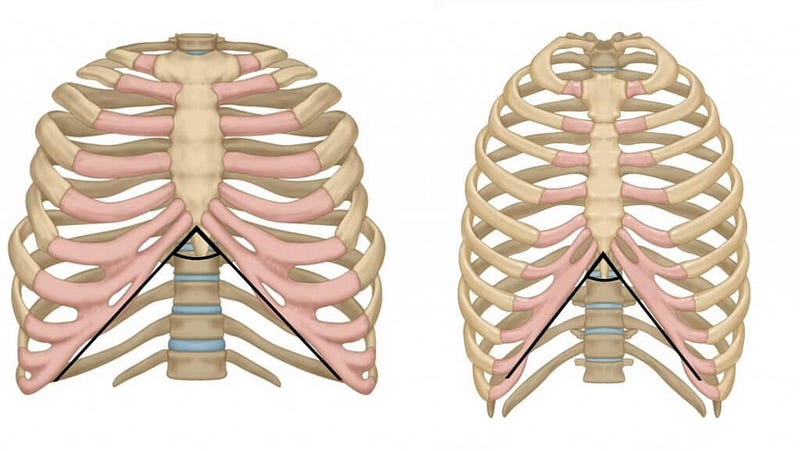
Bill Hartman’s ISA model classifies athletes based on their breathing mechanics and ribcage position. The infrasternal angle is formed by the lower ribs meeting at the sternum.
This classification system identifies two main types:
Wide ISA (>110 degrees):
- Ribcage biased toward exhalation/compression
- Typically associated with internal rotation tendencies
- Often presents with more pronounced spinal curves
Narrow ISA (<100 degrees):
- Ribcage biased toward inhalation/expansion
- Typically associated with external rotation tendencies
- Often presents with a flatter back appearance
While this model has gained popularity in baseball circles for explaining movement patterns and pitch shapes, it has important limitations that we need to address.
Saying someone is a wide or narrow ISA and explaining their mechanics that way is also lazy. Mechanics are fluid and ever-changing. An athlete is constantly interacting with their environment and their mechanics reflect their relationship with the constraints placed upon them. ISA is another one of those constraints, but it can be changed.
Just because someone is wide does not mean that they will be wide forever. Genetically, you are prone to certain biases. However, your bones can be changed following Wolff’s law:
“bones adapt to the mechanical loads placed on them, becoming stronger and denser to resist those loads”
The infrasternal ribs, the lower ribs that act as a “bucket handle”, are the most pliable and changeable in the entire axial skeleton. Unlike the upper ribs that firmly attach to the sternum, these bucket handle ribs connect to each other through cartilage, allowing for more flexibility in their position and angle. This dynamic nature of the infrasternal ribs is key to understanding the ISA model and how it can change over time.
Classifying someone inherently puts a limit on how they can move. The words supinator and pronator fall into this category as well. You’re a supinator so you can’t throw a high spin efficiency fastball. You should throw a sinker. NO. That’s not true. Classifications are just that, classifications. Many athletes are on a bandwidth. There aren’t any definitive answers. Some athletes will be more prone to throwing certain pitch shapes with the movements currently available to them. If you can give an athlete more movement solutions, that pitcher can throw more pitches.
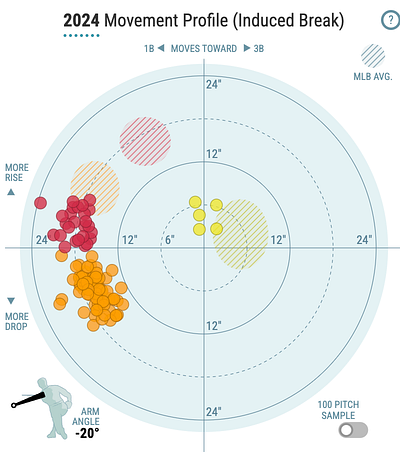
Changing a delivery from an E/W (east-west) bias like Tim Hill

to a more N/S (north-south) bias like James Karinchak

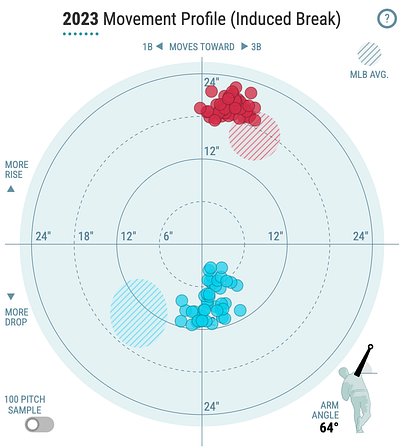
gives athletes different opportunities to throw certain pitches. E/W-biased athletes tend to be more rotational in their delivery and pitch shapes, while N/S-biased athletes tend to be more sagittal in their throwing delivery and pitch shapes. It has almost nothing to do with ISA.
A Better Way to Classify Athletes: Impulse Duration
The Physics of Pitching: Impulse and Momentum
In pitching, the fundamental goal is to accelerate the baseball from rest to release, resulting in a dramatic increase in velocity — potentially up to 100mph. The mechanics of this process are governed by the principles of physics, specifically, Newton’s second law of motion (F = MA), where the force (F) applied to the baseball (with a mass (M) of 5 ounces) leads to acceleration (A).
When a pitcher applies force to the baseball over the time of their pitching motion, this is known as an impulse, which is the product of force and time (Impulse = Force × Time). This impulse is directly related to the change in momentum of the baseball (Impulse = Change in Momentum), where momentum is defined as mass times velocity (p = mv). Therefore, an impulse results in a change in the baseball’s velocity, which for our purposes, equates to acceleration.
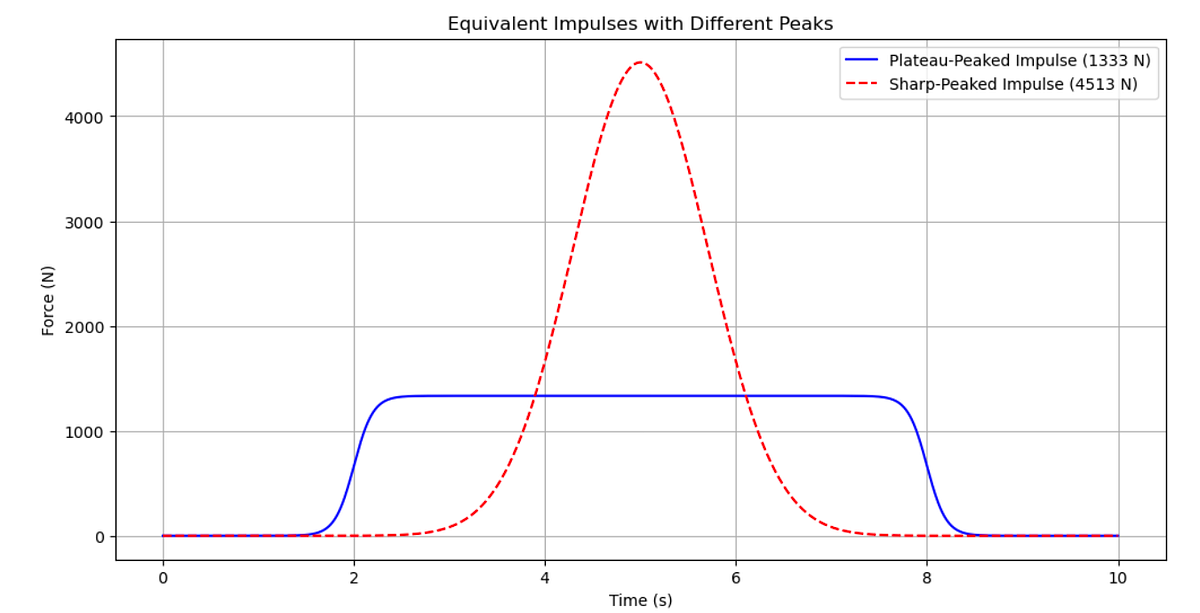
The time duration over which this force is exerted is critical. With a set impulse, extending the duration over which the force is applied will lead to a smoother, more gradual acceleration of the baseball. Conversely, if the same impulse is administered in a shorter period, the baseball will experience a sharper acceleration. Although the impulse is the same in both scenarios because the area under the impulse curve (force applied over time) is equivalent, the outcomes in terms of the baseball’s acceleration pattern are different.
Impulse and the Athlete’s Body
The concept of impulse doesn’t just apply to the baseball — it’s also fundamental to understanding how an athlete’s body generates and transfers force. Every athletic movement, from a pitcher’s wind-up to a batter’s swing, involves the application of force over time to change the body’s momentum.
Just like with the baseball, the time course of force application matters. An athlete who can generate a large amount of force very quickly will have a different impulse profile than one who applies force more gradually. These differences in impulse characteristics can manifest in distinct movement patterns and athletic capabilities.
How else would pitchers with different deliveries throw 100mph?


Pitchers can either impart momentum changes into the ball through longer or shorter duration impulses. Which gets us into our brand new classification system….
Long Duration Impulse
Long Duration Impulse athletes create momentum changes to objects over a longer duration. That’s the only movement classification — how they choose to apply force. This applies to all movements in sport. On the mound, these athletes typically have longer deliveries. In the weight room, these athletes take around 7–9 seconds to lift their 1 rep maximums. They need more time to apply force to an object to change its momentum.
We can work backward from that classification to understand the skeletal changes. These are just examples, because athletes exist in different states all the time. How an athlete chooses to apply force with their upper body may be different than their lower body. Some examples of skeletal changes are:
- An athlete needs to spend more time applying force into the ground during sport. The lower body adapts to need more external rotation because of the propulsion requirements during gait cycle.
- Athletes need to apply more force during their one rep max. A lot of these athletes need to brace to continue to apply force. Their ribcage expands because of this compression.
- An athlete needs more time during the delivery to apply force to the baseball. A slower delivery allows this athlete to apply more force to the baseball.
- An athlete throws heavy-weight balls at a higher velocity relative to their population. The heavier ball affords this athlete the opportunity during the delivery. The lightweight balls do not afford the athlete the same opportunity. Their velocity on these baseballs may struggle.
- These athletes may fatigue more quickly. Recruiting a lot of motor units repeatedly is tiring. Increasing the duration of this recruitment will increase how quickly that athlete gets tired.
Short Duration Impulse
Shorter Duration Impulse athletes will create more force over a shorter duration. Explosive is a term that comes to mind. Elite rate of force development. This bias towards quicker, faster generation of force means that the tendons, fascia, muscles, bones, and fascia have adapted together to generate more force. It’s not just muscles. Everything adapts to how the body chooses to create momentum changes in objects.
Some examples of how shorter-duration impulse athletes may have some of these movement tendencies:
- Shorter ground contact times. As a result of these quicker ground contacts athletes will make a different noise when their feet hit the ground. Higher pitched and louder noises will be made.
- Faster all around. 1 rep maxes will either be done quickly or fail. There’s no struggling out the last rep with these guys.
- Typically, faster throws. A classic explosive throw with an explosive finish.
- Applying lots of force requires elite amounts of energy transfer. The body needs to redirect energy back from the ground contacts mentioned earlier. Remember, there are equal and opposite forces being put back into the body from the ground as well. Sometimes these athletes can repetitively apply explosive effort because there is more energy transfer AND the motor units are recruited for less duration.
This classification system no longer limits athletes. All of these things can be changed. The central nervous system controls how fast and how many motor units are being recruited during high-velocity movement. Good weight room training can improve rate of force development (RFD).
This creates movement options with certain athletes. Mobility training can also increase movement options. Athletes may just have poor forearm supination or pronation. Opening up that ROM may allow these athletes to throw more pitches.
While the ISA model provides a helpful starting framework, it has limitations. The impulse duration model allows for a more complete view of an athlete’s current tendencies and future potential. By assessing and addressing impulse abilities, we can open up new avenues for enhancing athletic performance. The key is to not rigidly classify athletes, but to understand their current state and give them the tools to expand their movement options. With the right training, athletes can change their mechanics, pitch repertoires, and performance.
The Constraints-Led Approach
The constraints-led approach is a framework that views movement as an emergent property of the interaction between the individual, the task, and the environment. In this model, an athlete’s movement patterns are not solely determined by their physical characteristics or ISA but rather arise from the constant interplay between perception and action.
Individual Constraints:These include factors such as body dimensions, strength, flexibility, and skill level. The ISA classification falls under this category. However, it’s important to recognize that individual constraints are not fixed — they can be altered through training and experience.
Task Constraints:These are the specific demands of the activity or sport. In baseball, task constraints could include the type of pitch being thrown, the game situation, or the batter’s tendencies. Different tasks require different movement solutions.
Environmental Constraints: These encompass the physical and social context in which the action takes place. Factors like the mound condition, weather, crowd noise, and even the culture of the team can influence an athlete’s movement patterns.
The Perception-Action Coupling
At the heart of the constraints-led approach is the idea that perception and action are tightly coupled. Athletes continuously gather information from their environment, which guides their movement decisions in real time. This is a two-way street — as an athlete moves, they change their perceptual information, which in turn influences their next move.
For example, a pitcher doesn’t just execute a pre-programmed throwing motion. Nor does a blacksmith (have to shoutout Bernstein).
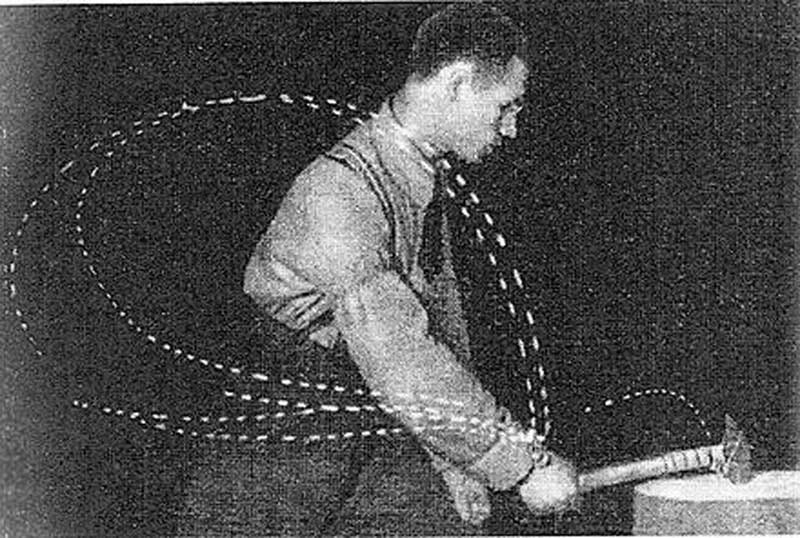
They are constantly adjusting based on proprioceptive feedback, the feel of the ball, the batter’s stance, and countless other variables. This perception-action coupling allows athletes to adapt to the ever-changing demands of the game.
Variability and Adaptability
From this perspective, movement variability is not a flaw but a feature. It reflects an athlete’s ability to adapt to different constraints and find multiple solutions to a motor problem. A skilled athlete is not one who always moves in the exact same way, but one who can flexibly adjust their mechanics to match the situation.
This is where the limitations of the ISA model become apparent. By classifying athletes into fixed categories, we risk overlooking their potential for adaptability. A “wide ISA” pitcher might typically rely on rotational mechanics, but with the right constraints, they could learn to efficiently throw north-south pitches as well.
The Role of Constraints in Training
One of the key insights from the impulse duration model is that an athlete’s force production capabilities directly influence the movement options available to them. An athlete who can produce more force will inherently have more opportunities to express that force in their sport.
As coaches, we have the power to manipulate these force production constraints through our training interventions. By focusing on increasing an athlete’s peak force output, we can open up new movement possibilities for them. This might involve strength training, plyometrics, or other modalities designed to enhance force production.
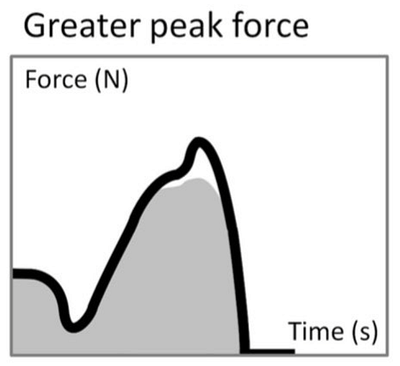
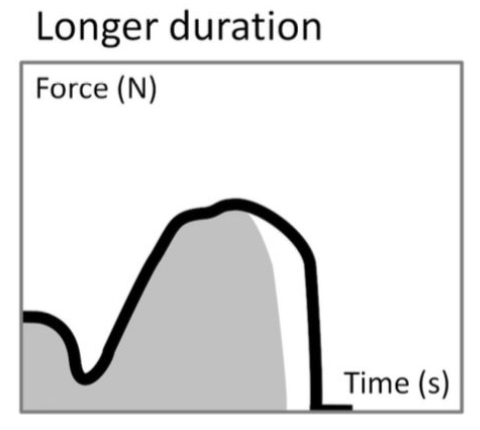
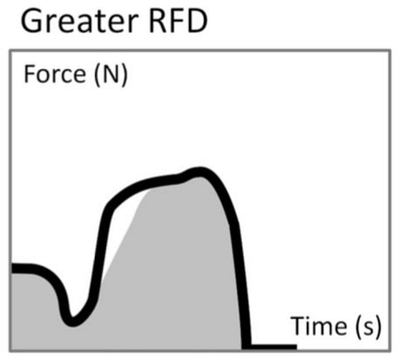
But it’s not just about raw force output. We can also manipulate constraints related to the time course of force application. Helping an athlete learn to express force more quickly or sustain force over longer durations can dramatically change their interaction with the demands of their sport.
The constraints-led approach also encourages us to think beyond just strength and power. Constraints related to mobility, stability, and even perception can all influence an athlete’s movement solutions.
Over a long enough time scale, we can potentially alter an athlete’s physical structure in ways that open up new movement possibilities. The well-documented changes in humeral retroversion (increased humerus external rotation) among throwers is a perfect example of how bone structure can adapt to specific loading patterns over time.
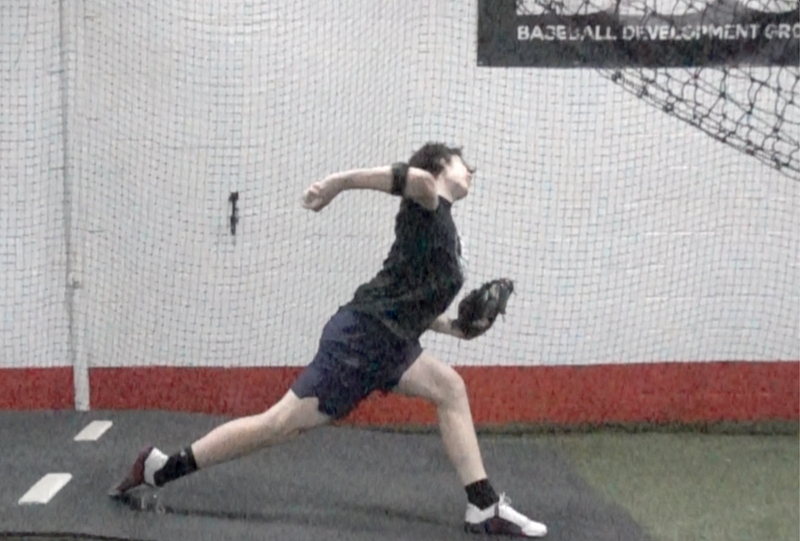
By applying the principles of bone adaptation (like Wolff’s law) in a targeted manner, we may be able to strategically manipulate an athlete’s mobility and skeletal structure. Changing these constraints could allow for movement solutions that weren’t previously accessible to the athlete.
Rob Hill famously went from low 90s to mid 90s by changing his body structure. Rob discusses that adaptation in the cited Spotify episode.
A few years before this video Rob Hill was a meatstick back squatting almost 4 bills in the Driveline gym and trying to throw low 90s in NAIA ball. Rob trained to increase impulse duration for a long time when training at Driveline. These were significant changes.
Rob needed these adaptations to throw 95. After his time lifting heavy weight, he transitioned to high peak force exercises. He trained the peak. This periodization of peak and duration impulse training propelled him to 95.
During these periods of training, Rob’s body structure changed. His ribcage got wider as he put on weight during duration changes. Meatball Rob. He lost a bunch of weight during his peak training. His ribcage got narrower. Skinny Rob. His ISA was dynamic and changing throughout his training lifecycle. It was a reflection of how he was training and recruiting motor units. NOT THE CAUSE!
The Takeaway
Mechanics are not a static but a dynamic, emergent process. The ISA model, while useful as a starting point, doesn’t capture the full complexity of how athletes interact with their environment. By embracing a constraints-led approach, we can create training environments that foster adaptability and unlock each athlete’s unique potential. The goal is not to fit athletes into boxes, but to expand their movement toolbox so they can effectively solve any motor problem the game throws at them.
Practical Takeaways
- Use classification systems to describe current constraints, not to cap future options.
- Pitch shape and delivery bias should be coached through task, athlete, and environment together.
- Impulse duration gives coaches a more actionable way to think about how athletes create force.
- Training should expand movement solutions instead of assigning permanent movement identities.